The full story
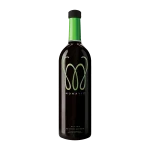
What is Monavie Active?
A fruit beverage built on acai, blended with eighteen more fruits and plant-based glucosamine.
The full story
What is Monavie Active?
A fruit beverage built on acai, blended with eighteen more fruits and plant based glucosamine. Two ounces, twice a day.
That is the whole product. Everything below is the detail, for anyone who wants it before they buy.
Nineteen fruits, led by acai
Acai is the base of the formula rather than one ingredient among many. It appears on the label as the AcaVie™ Complex, 9.3 grams per serving, combining organic acai fruit extract with organic acai spray dried powder. Around it sits the 19 Juice Blend, 13.4 grams per serving.
Open any fruit for its history.
AçaíEuterpe oleracea
Açaí is the base of the formula rather than one ingredient among many, and it is worth understanding why it behaves differently from everything else on the label.
The açaí palm grows in the floodplain forests of the Amazon estuary, concentrated in the Brazilian states of Pará, Amazonas, Amapá and Maranhão. It is a slender tree, often growing in clumps of four or five stems from a single root mass, reaching twenty five meters or more, and it fruits twice a year. The fruit itself is small, roughly the size of a large blueberry, and it is mostly seed. A single berry is around eighty percent stone, which means the edible portion is a thin layer of pulp and skin surrounding a pit. This is the first thing that separates açaí from the other fruits here: the yield is very low relative to the weight harvested.
Harvesting has not industrialized in the way most fruit crops have. The palms are too slender to climb with equipment and grow in seasonally flooded ground, so the fruit is still cut by hand by climbers who ascend the trunk using a woven loop around the ankles. The bunches are lowered, not dropped.
The second thing that separates açaí is how quickly it degrades. The pulp begins to deteriorate within about twenty four hours of picking, and in practice much sooner in Amazonian heat. There is no equivalent of shipping fresh apples across an ocean. Everything that leaves the region has been processed close to where it was picked, which is why açaí reaches the rest of the world as frozen pulp, juice, or dried powder, and effectively never as fresh fruit.
Traditional preparation reflects both facts. The berries are soaked in water to soften the tough skin, then rubbed and mashed by hand or machine to separate pulp from stone, producing a thick purple liquid. Amazonian communities have prepared it this way for generations, eaten as a staple rather than a treat, often alongside fish or cassava rather than as something sweet. The version most of the world encountered in the 2000s, sweetened and served as a dessert bowl, is a recent commercial adaptation rather than the traditional food.
On your label açaí appears as the AcaVie™ Complex, 9.3 grams per serving, combining organic açaí fruit extract with organic açaí spray dried powder. Two preparations of the same fruit, which is a formulation choice rather than an accident: extract and powder behave differently in a liquid, and using both gives a different result from using either alone.
PearPyrus communis
The pear was domesticated somewhere between the Caucasus and Anatolia, and it is old enough to appear in Homer. In the *Odyssey* the orchard of Alcinous grows pears among the fruits Homer describes as the gift of the gods, bearing in every season. That places cultivated pears in the Greek imagination by the eighth century BC at the latest.
The Romans took the crop seriously. Pliny the Elder catalogued dozens of named varieties in the first century, distinguishing them by season, texture and what they were best used for, and Roman agricultural writers describe grafting techniques that would be recognizable to an orchardist today.
Grafting is not optional with pears, and understanding why explains a great deal about orchard fruit generally. A pear grown from seed does not resemble its parent. The offspring of a fine dessert pear is overwhelmingly likely to be a small, hard, astringent thing suitable only for cooking or for livestock. The useful characteriztics of a named variety survive only by taking cuttings and joining them to rootstock, which means that every Conference or Bartlett pear in existence is a clone descended by cutting from one original tree. Some varieties grown commercially today have been propagated this way continuously for several centuries.
Pears also ripen unusually. Most fruit is best left on the tree, but a pear left to ripen in place goes soft at the core first and turns gritty. Commercial pears are picked mature but hard and ripened afterwards, which is why a pear from a shop is so often either rock solid or, two days later, past its best.
Pressed pear is mild, lightly sweet and low in acidity. That is precisely why it appears at the front of a blend: it adds volume and body without imposing a flavor of its own, carrying stronger fruits rather than competing with them.
AppleMalus domestica
Every cultivated apple in the world descends from *Malus sieversii*, a wild apple that still grows in the Tian Shan mountains on the border of Kazakhstan and China. The forests there contain the full genetic range of the species, including wild trees producing fruit indistinguishable in size and sweetness from supermarket apples, which is unusual: most crop plants look nothing like their wild ancestors. The old name for Almaty, Kazakhstan's largest city, is commonly glossed as "father of apples", and the city sits at the foot of those forests.
The apple traveled west along the trade routes that became the Silk Road. Horses played a genuine part in the process: they eat fallen fruit, carry the seed some distance, and deposit it with a quantity of fertiliser, which is an efficient dispersal mechanism for a fruit whose seeds survive digestion.
Like the pear, the apple does not breed true. A pip from a Gala produces a tree that is not a Gala and is usually not worth eating. This is why the roughly seven thousand named varieties in existence are each clones, and why apple history is full of chance discoveries rather than deliberate breeding: someone finds an unusually good seedling growing at a roadside, and every tree of that variety thereafter is propagated from it. The Bramley, the Granny Smith and the McIntosh all began as single found trees.
Grafting also allows a grower to separate the fruit from the roots. Modern orchards graft a chosen variety onto dwarfing rootstock, which controls the size of the tree and how early it bears, so a commercial orchard can be picked from the ground rather than from ladders.
Juiced apple contributes a clean acidity that keeps a heavy, sweet blend from tasting flat.
KiwiActinidia deliciosa
The kiwi is native to central and eastern China, growing wild as a vigorous vine in the Yangtze river valley, where it was known and eaten long before it was cultivated anywhere else. Western botanists collected it in the nineteenth century and it was grown in Britain and the United States as an ornamental climber, valued for its foliage rather than its fruit.
Its commercial history begins with seeds carried to New Zealand in 1904 by Isabel Fraser, a school principal returning from visiting mission schools in Hubei. New Zealand growers spent the following decades selecting for size and flavor, and by the 1930s had produced fruit recognizably like what is sold today.
For most of that period it was called the Chinese gooseberry. The name changed in 1959 for reasons that were partly commercial and partly geopolitical: American importers during the Cold War were reluctant to stock produce with "Chinese" in the name, and "gooseberry" invited a tariff classification the exporters did not want. The industry settled on kiwifruit, after the kiwi bird, on the basis that both are small, brown and fuzzy. It is one of the few cases where a fruit's common name was deliberately manufactured for export and stuck globally.
The plant is dioecious, meaning individual vines are male or female, so an orchard needs both and only the females fruit. The vines are vigorous enough to require heavy annual pruning and substantial support structures.
Kiwi flesh is bright green, flecked with small black seeds, and distinctly tart. It contains actinidin, a protease which breaks down protein, which is why fresh kiwi will not set in gelatine and why it has long been used as a meat tenderiser.
GrapeVitis vinifera
The grape is among the oldest cultivated fruits on earth, and its domestication is one of the better documented events in agricultural history. The evidence points to the South Caucasus, in the region of modern Georgia and Armenia, around 6000 BC. The oldest known winery yet excavated is at Areni-1, a cave complex in southern Armenia, where archaeologists found a clay fermentation vat, a shallow press, drinking vessels and quantities of grape seeds and pressed skins, dated to roughly 4100 BC. The site is a functioning winemaking operation, not a hint of one.
From there the grape follows nearly every ancient trade route. It moves west through Anatolia into Greece and Italy, north into what is now France, and east along the corridors that became the Silk Road. Wherever it went it tended to arrive alongside the technology for pressing and fermenting it, because the two traveled together.
The species is hermaphroditic in cultivation but the wild ancestor is largely dioecious, and one of the changes that accompanied domestication was the selection of vines carrying both sexes on the same plant, which makes reliable fruiting possible without depending on a neighboring vine.
Grapes are propagated by cutting rather than seed, for the same reasons as apples and pears, and a commercial vine can be productive for many decades. The oldest producing vines in some European vineyards are well over a century old.
In a blend, grape contributes body and natural sweetness. It is one of the highest sugar fruits available as a juice, which is why it so often appears alongside sharper fruits that would be austere on their own.
Concord grapeVitis labrusca
The Concord is an American grape with a precisely documented origin, which is rare. Ephraim Wales Bull, a goldbeater by trade who had moved to Concord, Massachusetts, planted seed from a wild native grape growing on his land in 1843. He was selecting for a specific problem: European wine grapes did not reliably ripen in a New England season before frost, and the native *Vitis labrusca* did, but the fruit was inconsistent. Bull raised something over twenty thousand seedlings and selected one. He released it in 1854.
It succeeded immediately and comprehensively, and Bull made almost nothing from it. Once a vine is released, anyone holding a cutting can propagate it, and nurserymen multiplied and sold the Concord faster than its originator could. His gravestone in Concord reads "He sowed, others reaped." ⚠ *The epitaph is on the stone and is widely reported; accounts of how bitter he was about it vary and should be treated as tradition rather than established fact.*
The variety's second life came in 1869, when Thomas Bramwell Welch, a dentist and Methodist communion steward in Vineland, New Jersey, pasteurized Concord juice to produce an unfermented wine for church use. The product took time to find a market but eventually made the Concord the defining grape flavor in American food, distinct from the European grape most of the rest of the world means by the word.
The Concord is what is called a slip skin grape: the skin separates cleanly from the pulp, which is characteriztic of *labrusca* and quite unlike a wine grape. The aroma is powerfully musky, a quality wine makers call foxy and generally avoid, and which is exactly what makes it recognizable.
Tradition, not record. The epitaph is on the stone and widely reported. Accounts of how bitter he was about it vary, so treat that part as tradition.
CranberryVaccinium macrocarpon
The cranberry is a low, trailing, evergreen vine that grows in acidic peat bogs, and it is one of only a small handful of commercially significant fruits native to North America. It grows wild across the northeast of the continent and was a staple food long before European settlement, eaten fresh, dried, and combined with dried meat and fat to make the preserved food usually recorded as pemmican, where the fruit's acidity helped keep the mixture from spoiling.
The name is generally traced to "craneberry", from the flower. The blossom hangs on a slender arched stem with the petals swept back, and early European settlers read the shape as the head and bill of a crane.
Cranberry cultivation is unlike most fruit growing. The vines are grown in constructed beds layered with sand over peat, and although the beds are often called bogs they are not flooded for most of the year. Flooding is a harvest technique and a winter protection measure. Each berry contains four small air chambers, so when a bed is flooded and the vines are agitated the fruit floats free and is corralled at the surface with booms. This is the image most people associate with cranberry growing, and it is used for fruit destined for juice and processing. Berries intended for sale fresh are dry harvested with mechanical pickers, because floating damages them.
The plant is extremely long lived. Some commercial beds in Massachusetts have been in continuous production for well over a century on the original vines.
Cranberry is sharply tart, high in acid and low in sugar, which is why it is almost never sold as pure juice and why it works in a blend as a corrective to sweeter fruits.
BananaMusa acuminata
The banana was domesticated in New Guinea, and the archaeological evidence for it is unusually good: drainage channels and cultivation traces at the Kuk Swamp site in the highlands date banana growing there to roughly seven thousand years ago, making it one of the oldest cultivated crops anywhere.
The plant is not a tree. It is the largest herbaceous flowering plant in the world, and what appears to be a trunk is a pseudostem, a tightly rolled column of leaf bases. It is not woody, which is why a banana plant can be cut down with a single stroke of a machete, and why plantations are vulnerable to wind.
Edible bananas are parthenocarpic: they develop fruit without fertilisation. Cultivated varieties are also effectively sterile, which means they cannot be grown from seed and every plant is propagated vegetatively from suckers thrown up by the parent. A commercial banana variety is therefore not a variety in the ordinary sense but a single clone, reproduced indefinitely. The tiny brown flecks running through the flesh are aborted ovules, the vestige of the seeds a wild banana would carry. A wild *Musa* fruit is largely filled with hard black seeds and is barely edible.
This clonal uniformity is the banana's structural weakness. The variety that dominated the export trade until the 1950s, the Gros Michel, was effectively destroyed by a soil fungus because every plant was genetically identical and none had resistance. It was replaced by the Cavendish, which now faces a related strain of the same disease for the same reason.
In a blend, banana contributes smoothness and body rather than acidity or brightness.
PineappleAnanas comosus
The pineapple originated in the region between southern Brazil and Paraguay and had been carried, cultivated and traded across much of South America and the Caribbean long before Europeans arrived. Columbus encountered it on Guadeloupe in 1493. The botanical name comes from the Tupi-Guarani word *nanas*, and most European languages use a version of it. English is the outlier, having borrowed "pineapple" from an older word for a pine cone, which the fruit resembles.
It is a composite or multiple fruit. What looks like one fruit is the fused product of many individual flowers arranged around a central stem, and each hexagonal "eye" on the skin marks where one of those flowers was. The plant is a bromeliad, related to Spanish moss, and grows as a low rosette of stiff leaves, producing a single fruit at a time.
In eighteenth century Europe the pineapple became a spectacular status object. Growing one outside the tropics required a heated glasshouse, called a pinery, maintained at expense through a northern winter for the two or more years the plant took to fruit. A single pineapple could represent an extraordinary sum, and they were commonly rented for an evening as a table centerpiece and returned, passing from household to household until they were too far gone to display. The fruit's long association with hospitality, and its appearance carved into gate posts, bedheads and architectural details, dates from that period.
Pineapple contains bromelain, a protein digesting enzyme, which is why fresh pineapple stings the mouth in quantity and why it will not set in gelatine unless cooked first.
PlumPrunus domestica
The plum belongs to the genus *Prunus*, which also contains cherries, peaches, apricots and almonds. All are stone fruits, and the family resemblance is structural: a fleshy outer layer around a hard pit containing a single seed.
The European plum is hexaploid, carrying six sets of chromosomes where most plants carry two, and is generally understood to have arisen as a natural hybrid, probably of the cherry plum and the blackthorn, somewhere near the Caucasus. That polyploidy is part of why plums are so variable and why the species has produced such a wide range of types, from tiny sharp damsons to large sweet dessert plums.
The damson takes its name from Damascus. Roman writers record the fruit being brought west from Syria, and the name has followed it through Latin and French into English. Plums appear consistently in Roman agricultural writing, and Pliny distinguishes several kinds.
Plums split broadly into those that separate cleanly from the stone and those that do not, a distinction that matters commercially: clingstone fruit is harder to process, freestone easier, and varieties are selected accordingly.
Pressed plum juice is dark, sweet and faintly tannic, with an astringency that comes largely from the skin.
Tradition, not record. This ingredient is plum juice concentrate. A prune is a dried plum, from varieties suited to drying, and is a different thing.
AcerolaMalpighia emarginata
Acerola is known variously as the Barbados cherry, the West Indian cherry or the wild crepe myrtle, and it is not a cherry at all. It is a small shrub or tree of the family Malpighiaceae, native to the tropical Americas, ranging from the Yucatán through Central America and into northern South America and the Caribbean. The fruit is small, bright red, and superficially cherry like, but it is three lobed and carries three seeds rather than a single stone.
Its notable characteriztic is vitamin C content. Acerola is among the richest natural sources of ascorbic acid known in any fruit, at levels far above citrus. Figures vary widely with ripeness and growing conditions, and unripe fruit is substantially higher than ripe, which is a genuine complication for anyone growing it for that reason: the point of maximum vitamin content and the point of best eating are not the same.
The fruit is extraordinarily perishable. It bruises on handling and begins deteriorating within hours of picking, which is why acerola is almost never seen fresh outside the regions that grow it. Essentially all of it is processed close to the tree, into juice, purée or dried powder.
The plant itself is drought tolerant and fruits several times a year in suitable climates, which makes it a practical smallholder crop across its range.
BilberryVaccinium myrtillus
The bilberry is the wild European relative of the blueberry, growing across northern Europe on heath, moor and acidic woodland floor, from Britain and Ireland across Scandinavia and into northern Asia. It is a low, spreading shrub, rarely more than knee height.
The most obvious difference from a blueberry is internal. A blueberry is pale green or white inside; a bilberry is stained deep red purple all the way through. That pigmentation is why it has been used as a dye as well as a food, and why picking bilberries reliably stains hands and mouths in a way blueberries do not. The fruits also differ in habit: bilberries grow singly or in pairs directly on the stem, while blueberries grow in clusters.
Bilberry resists cultivation. Attempts to bring it into commercial production have largely failed, and the overwhelming majority of the crop is still gathered from the wild, often under traditional access rights. In parts of Scandinavia and eastern Europe wild picking remains a significant seasonal activity.
Tradition, not record. A wartime story held that RAF night fighter crews were fed bilberry jam to sharpen their night vision. It is generally understood to have been cover for the introduction of airborne radar. Folklore, not a claim.
GojiLycium barbarum
Goji has been grown in China for well over a thousand years, appearing in agricultural and medical texts across successive dynasties. The Ningxia region on the upper Yellow River is still regarded as the traditional center of production, and the fruit carries a regional identity there comparable to a European appellation.
Botanically it is a member of the Solanaceae, the nightshade family, which places it alongside tomatoes, potatoes, peppers, eggplants and tobacco. The plant is a sprawling, somewhat thorny deciduous shrub, and the fruit is small, elongated and orange red rather than round and dark.
Handling is the constraint. The fresh fruit oxidizes and blackens where touched, so it is traditionally harvested by shaking the bushes onto mats rather than picking by hand, and is then dried rather than sold fresh. Nearly all goji reaching Western markets is dried or processed for that reason.
The English name wolfberry predates goji by a considerable margin. It appears to derive from a misreading of the Chinese name, and the "wolf" element is likely an error rather than a description of anything about the plant. Goji entered English in the twentieth century as a transliteration of the Chinese *gǒuqǐ*, and became the dominant commercial name.
The two words mean the same fruit. Unlike plum and prune, there is no fresh-versus-dried distinction between them.
BlueberryVaccinium corymbosum
The blueberry is native to North America and, almost uniquely among the fruits on this list, was domesticated within living memory. Wild blueberries had been gathered for millennia, but every attempt to bring the plant into cultivation failed for a reason nobody understood: transplanted bushes died.
The problem was solved by Frederick Coville, a botanist with the United States Department of Agriculture, who established in the early 1900s that blueberries require strongly acidic soil and specific mycorrhizal associations, and will not survive in the neutral ground that suits most crops.
The commercial breakthrough came from a collaboration. Elizabeth White, whose family grew cranberries at Whitesbog in the New Jersey Pine Barrens, read Coville's work and offered him land and labour. She then paid local residents, who knew the pinelands intimately, to locate the wild bushes bearing the largest fruit, naming each find after the person who reported it. Coville crossed the best of them. Their first commercial crop was sold in 1916.
Every cultivated highbush blueberry grown anywhere today descends from that program. It is an unusually short and unusually well documented path from wild plant to global crop, and it happened inside a single working lifetime.
Blueberry is mild, sweet and low in acid, with the characteriztic pale flesh that distinguishes it from its European relative the bilberry.
ElderberrySambucus nigra
The elder has one of the longest folk records of any plant on this list. It appears in Hippocrates, runs through Roman and medieval herbals, and occupies a substantial place in northern European folklore, where the tree was widely believed to be inhabited or protected and was often left standing when other scrub was cleared. In some traditions permission was asked before cutting one.
The plant is a fast growing shrub or small tree with hollow, pithy stems, which have been used for centuries to make whistles and blowpipes, and which is the likely origin of the name: Old English *ellærn* is thought to relate to a word for hollow.
Both flowers and berries are used. The flowers are made into cordials and wines and are typically used fresh; the berries are made into wines, preserves, syrups and pies.
The berries are traditionally cooked or pressed rather than eaten raw, and there is a practical reason for it. The raw fruit, along with the leaves, bark and stems, contains cyanogenic glycosides, compounds that release small amounts of cyanide when broken down, and which cause nausea in quantity. Heating or processing deals with them. This is not an obscure caution; it is why every traditional preparation of elderberry involves cooking, and why the fruit is almost never eaten straight from the bush.
PomegranatePunica granatum
The pomegranate is native to the region between Iran and northern India and has been cultivated across the Middle East, the Mediterranean and northern India since antiquity. It is among the earliest fruits domesticated anywhere, alongside the olive, fig, date and grape.
The English name comes through Old French from the Latin *pomum granatum*, the seeded apple. The same fruit gives the grenade its name, borrowed for the shape of the early weapon and for the way it scatters its contents.
Few fruits carry as much cultural freight. It is the fruit Persephone eats in the underworld, binding her to return there each year and providing the Greek explanation for the seasons. Pomegranates are carved on the pillars of Solomon's temple in the description in Kings, and a Jewish tradition holds that the fruit contains 613 seeds, one for each commandment, though actual counts vary considerably. The motif recurs through Persian textiles, Byzantine mosaic, Renaissance painting and Spanish heraldry; the city of Granada carries one on its arms.
Structurally the fruit is unusual. The interior is divided by membranes into chambers packed with arils, each aril a translucent sac of juice surrounding a single seed. The juice is entirely contained in those sacs, which is why the fruit keeps so well and why extracting it is laborious.
Pomegranate juice is sharp, tannic and deeply colored.
BlackberryRubus fruticosus
aggregate
The blackberry is not one species. It is a complex of hundreds of closely related microspecies, which botanists handle by writing the name as an aggregate rather than pretending to a precision that does not exist. Britain alone has several hundred recognized forms.
The reason for this is apomixis. Many brambles set seed without fertilisation, producing offspring genetically identical to the parent. A distinctive local bramble can therefore persist unchanged for centuries across a limited area and is, functionally, its own species. Bramble taxonomy is consequently a specializt field with a reputation for difficulty.
The plant spreads aggressively by two mechanisms: seed carried by birds, and tip-rooting, where an arching cane touches the ground and roots at the tip, producing a new plant a meter or two from the parent. This is why a bramble patch advances outward and why it is so difficult to clear.
The fruit is an aggregate of drupelets, each a tiny stone fruit with its own seed, clustered on a central core. A blackberry retains that core when picked; a raspberry, which is structurally similar, leaves it behind on the plant, which is the simplest way to tell them apart.
The flavor is deep, winey and slightly earthy, and it is one of the darkest notes available in a fruit blend.
Passion fruitPassiflora edulis
The passion fruit is native to southern Brazil, Paraguay and northern Argentina, and grows as a vigorous climbing vine with tendrils, capable of covering substantial ground in a season.
The name comes from the flower, not the fruit, and specifically from Spanish missionaries in South America in the sixteenth and seventeenth centuries, who read the bloom as a depiction of the Crucifixion. The elaborate corona of filaments was taken for the crown of thorns; the five stamens for the five wounds; the three stigmas for the three nails. They called it *flor de las cinco llagas*, the flower of the five wounds. The reading was used in teaching, and the name traveled with the plant into English as the passion flower, and from there to the fruit.
The flower is genuinely remarkable independent of the interpretation, with a structure unlike almost anything else in cultivation, and the genus contains several hundred species.
The fruit is a berry with a hard rind that wrinkles as it ripens, which is a ripeness signal rather than a fault. The interior is a mass of seeds each surrounded by an aromatic gelatinous pulp, and both are eaten together. The aroma is intense and disproportionate to the quantity of juice, which is why a small amount is used to carry a much larger blend.
Sweet cherryPrunus avium
The sweet cherry is the wild ancestor of most dessert cherries grown today, native to Europe and western Asia, and distinct from *Prunus cerasus*, the sour or tart cherry used in cooking and preserves. The two are separate species with different uses, and most commercial sour cherry is processed rather than sold fresh.
The species name *avium* means "of the birds", and it is apt. Birds strip wild cherry trees comprehensively and have carried the species widely, and bird pressure remains one of the practical difficulties of growing cherries commercially, which is why orchards are so often netted.
The tree is also valued for timber, and cherry wood is a prized cabinet making material, which is unusual for a fruit tree.
Sweet cherry is rounder, firmer and considerably sweeter than the sour species, and contributes a rich, slightly almond edged note, a family characteriztic that comes from the same compounds found in the kernels of other *Prunus* fruits.
Tradition, not record. Roman tradition credits Lucullus with bringing the cultivated cherry to Rome from Cerasus, modern Giresun in Turkey, after his campaign there in 72 BC. The story comes from Pliny and is repeated constantly, but cherries were known in Europe well before that date.
Plant based glucosamine, not shellfish
What glucosamine is
Glucosamine is an amino sugar, a molecule combining a sugar with an amine group. It occurs naturally in the body and is one of the building blocks of glycosaminoglycans, which are components of cartilage, the connective tissue that cushions the ends of bones where they meet at a joint.
It is one of the most widely taken supplement ingredients in the world, and has been for decades.
Where it usually comes from
The overwhelming majority of glucosamine on the market is derived from chitin, the structural material in the shells of crustaceans. Shrimp, crab and lobster shells are a large scale by product of the seafood industry, and extracting glucosamine from them is well established and cheap.
That has a consequence most buyers never think about until it applies to them: standard glucosamine is a shellfish product. For anyone with a shellfish allergy, anyone vegetarian or vegan, and anyone keeping kosher or halal, the default option on the shelf is unsuitable.
Where yours comes from
The glucosamine in Monavie Active is produced by fermentation from corn. Fungal fermentation of a plant substrate produces the same glucosamine molecule without any animal input at any stage. The finished compound is glucosamine hydrochloride, exactly as the label states.
Monavie Active contains no shellfish and no animal by products in its glucosamine source.
Each serving contains 750 mg. At the directed two servings a day, that is 1,500 mg daily.
It is included for joint and mobility support.
How the two routes actually differ
The shellfish route starts with chitin, the tough structural polymer that makes up crustacean shells. Chitin is treated to remove protein and mineral, then broken down chemically to release glucosamine, which is purified and converted to a salt for stability. The raw material is essentially free, being a waste stream from seafood processing, which is why this route dominates the market on cost alone.
The plant route does not start with a shell at all. A fungal culture is grown on a plant substrate, in this case corn, under controlled fermentation. The organism produces chitin in its own cell walls as part of normal growth, and glucosamine is recovered from that. No animal material is involved at any point in the process, and the substrate is agricultural rather than marine.
Both routes converge on the same molecule. Glucosamine produced by fermentation is not an analogue or a substitute; it is glucosamine. What differs is the starting material and everything that follows from it: allergen status, dietary suitability, and the supply chain behind it.
Hydrochloride and sulfate
Glucosamine is stabilized as a salt, and two are common: glucosamine hydrochloride and glucosamine sulfate. Yours is the hydrochloride, as the panel states.
The distinction matters mainly because the two are not directly interchangeable by weight. Hydrochloride carries a higher proportion of glucosamine per gram than sulfate does, because the sulfate form is usually stabilized with an additional salt, most often potassium or sodium chloride, which adds weight without adding glucosamine. A stated quantity of one is therefore not the same quantity of the other, and comparing products by the number on the label without checking which salt is involved will mislead.
An honest note on the difference
This is worth saying rather than leaving out.
The plant derived and shellfish derived forms are the same molecule, but research into glucosamine has historically been conducted using particular preparations, and absorption and effect can vary between forms and between individuals. Anyone choosing between them for a specific reason is best served by a conversation with a healthcare provider or a nutritionist rather than by a paragraph on a product page.
Stating that plainly is not a weakness in the product. It is the difference between a page that informs and a page that sells.
How to drink it
- Serving size
- 4 tablespoons (60 mL), which is two fluid ounces
- Servings per bottle
- 12.5
- How often
- Two ounces twice daily, about twenty minutes after a meal
- A bottle lasts
- A little over six days at that rate
- Glucosamine
- 750 mg per serving, 1,500 mg a day
- Unopened shelf life
- One year from the date of manufacture
- After opening
- Shake well before use. Keep refrigerated.
Six days a bottle is worth knowing when you choose how often a subscription arrives. It is why weekly and every two week deliveries exist alongside monthly ones.
Why blend at all
A nineteen fruit blend invites an obvious question: why not simply use açaí?
Fruits do different jobs in a liquid, and the distinctions are practical rather than decorative.
Base fruits provide volume, body and a neutral sweetness that carries everything else. Pear and apple are the classic examples, which is why they lead the ingredient list by weight. A blend built without them would be intensely flavored and difficult to drink in quantity.
Acid fruits provide sharpness and structure. Cranberry, kiwi and pomegranate prevent a sweet blend from tasting flat or cloying. Acidity also has a practical function beyond flavor: it affects stability and mouthfeel.
Color and depth come from the dark fruits. Açaí, bilberry, blackberry, elderberry and Concord grape carry the anthocyanin pigments that give the blend its color, and they contribute the deep, winey notes underneath.
Aromatics are used in small quantities for disproportionate effect. Passion fruit is the clearest example: a small amount carries a much larger volume, because the aroma compounds are intense.
Body and texture come from fruits like banana and the purée concentrates, which add substance that a clear pressed juice cannot.
Sequence matters as much as selection. Ingredients on a supplement panel are listed in descending order by weight, which means the list itself tells you the proportions even when individual amounts are not disclosed. On your blend, pear and apple lead, the darker and sharper fruits sit in the middle, and the intense aromatics sit near the end. That order is the recipe, readable by anyone who knows to look.
Two forms of the same fruit are not duplication. Your blend lists pear twice, as juice concentrate and as puree concentrate, and grape twice, as grape and as Concord grape. These are deliberate. Juice and puree of the same fruit contribute differently, one clear and one carrying pulp, and two grape varieties are two distinct flavors rather than one repeated. A reader counting names and finding nineteen is counting ingredients; a reader counting distinct fruits will arrive at a slightly smaller number, and both readings are correct.
Why not simply concentrate the acai further. Because a drink is consumed, not measured. A formulation heavy enough in a single strong fruit becomes something people take rather than something they drink, and a product taken twice daily has to remain pleasant on the four hundredth serving as much as the first. Blending is what makes a daily habit sustainable.
The result is a formulation rather than a mixture. Nineteen fruits is a number that sounds like marketing, but the ingredient list reads like a recipe with each component doing something specific.
Understanding the label
What the words on the panel actually mean
Your supplement facts panel uses five different preparation terms, and they are not interchangeable. Almost nobody explains the difference, so it is worth doing.
Juice concentrate. Juice with most of the water removed, usually by evaporation under vacuum at low temperature. Concentrating reduces weight and volume for shipping and improves stability, and water is added back later. The process is old and well understood, and the low temperature matters: boiling juice would cook it.
Purée concentrate. The same idea applied to purée rather than juice. Purée includes the pulp, so it carries fiber and body that pressed juice does not. A label listing both a juice concentrate and a purée concentrate of the same fruit, as yours does with pear, is including two different things: the clear liquid and the flesh.
Fruit extract. A preparation in which specific components are drawn out of the fruit using a solvent, most often water or alcohol, and then concentrated. Extracts are more targeted than juice and are used where a particular fraction of the fruit is wanted rather than the whole.
Spray dried powder. Liquid is atomised into a stream of hot air, where the droplets dry almost instantly into fine particles. The contact with heat is extremely brief, which is why the technique is used for heat sensitive materials. The result is a shelf stable powder that redissolves.
Fruit powder. Dried and milled fruit. Simpler than spray drying, and the drying may be by any of several methods.
Your açaí appears as both an extract and a spray dried powder, and that combination is deliberate rather than redundant.
Why the panel has a dagger next to some lines
Two symbols appear in the right hand column of your panel.
The asterisk on Total Carbohydrate refers to the note that Percent Daily Values are based on a 2,000 calorie diet. Daily Values are reference amounts set by the FDA for labeling purposes. They are not personal recommendations; they exist so that different products can be compared on a common basis.
The dagger means "Daily Value not established". It appears on ingredients for which no reference amount exists, either because the substance has no established requirement or because the evidence does not support setting one. Total Sugars, Glucosamine Hydrochloride, the AcaVie Complex and the 19 Juice Blend all carry it.
A dagger is not a criticism of an ingredient. It states that there is no official benchmark to express it as a percentage of, which is a fact about the regulatory framework rather than about the substance.
Serving size, and why 12.5
Serving size on a supplement panel is not a recommendation about how much to consume. It is the reference quantity that every other number on the panel refers to, and it is chosen to reflect how the product is actually used.
Yours is 4 tablespoons, 60 mL, which is two fluid ounces, and the directions are two servings daily. Servings per container is 12.5, which follows arithmetically from a 25.3 fluid ounce bottle divided into two ounce servings. At the directed rate a bottle lasts a little over six days.
That half serving is not sloppiness. Declaring 12.5 rather than rounding to 12 or 13 is the accurate figure, and rounding it would misstate either the container size or the serving.
Understanding this is genuinely useful when choosing a delivery frequency. A customer drinking as directed goes through a bottle in about six days, which is why weekly and biweekly subscription options exist alongside monthly ones, and why the right choice depends on how many bottles arrive at a time rather than on a general assumption about how long a bottle lasts.
Why some ingredients are grouped
Your panel lists the AcaVie Complex and the 19 Juice Blend as single lines with a combined weight, followed by their components. This is a proprietary blend listing, which is permitted: the components must be named in descending order by weight, but the individual amounts need not be disclosed.
Formulators use it to protect a recipe. The trade off is that a customer can see what is in the blend and its total weight, but not the split between components. Worth stating plainly rather than leaving a reader to work out.
Every word on the label, in plain English
Supplement labels are written to a legal standard, not a readable one. Almost none of it deserves the reaction it gets from anyone who reads it closely.
First, why a vitamin is named twice
Your panel reads "Vitamin A (as retinyl palmitate)" rather than simply "Vitamin A". That format is required, and the reason is useful.
A vitamin is not one substance. It is a family of related compounds that the body can use for the same purpose, and they differ in stability, in how well they survive being mixed into a liquid, and in how they are absorbed. A manufacturer has to choose one, and the label has to say which, so the first name is the nutrient and the name in brackets is the specific chemical used.
Reading the bracket is how you tell two products apart when the front of the bottle says the same thing.
The vitamins
Vitamin A (as retinyl palmitate) Retinyl palmitate is vitamin A joined to palmitic acid, a common fatty acid. The combination is far more stable than vitamin A on its own, which degrades quickly when exposed to light, heat or air. It is the standard form used in fortified foods and is also found naturally in animal-sourced vitamin A. The body separates the two parts during digestion and uses the vitamin A.
Vitamin C (as ascorbic acid) Ascorbic acid is not a form of vitamin C. It is vitamin C. The two names describe the same molecule, one common and one chemical, and seeing the chemical name on a label means nothing more than that the label is written properly. It was named for what its absence causes: scurvy, from the Latin scorbutus, hence a-scorbic, meaning against scurvy.
Vitamin E (as dl-alpha tocopheryl acetate) Three pieces of information sit in that name. Tocopherol is the vitamin E family. Alpha identifies which member, and it is the one the human body uses most readily. Acetate means it has been joined to acetic acid, which protects it from oxidizing on the shelf, and which the body removes during digestion.
The dl prefix indicates a synthetic version containing a mixture of mirror image forms of the molecule, where a naturally sourced vitamin E would be labeled d only. Both are used widely in food and supplements. The synthetic form is more stable and less expensive; the natural form is somewhat more readily used by the body, which is why regulations account for the difference when calculating Daily Values.
Niacin (as niacinamide) 5 mg NE Niacin is vitamin B3, and it comes in two forms. Nicotinic acid causes a harmless but startling flushing of the skin at higher doses, a hot reddening that alarms people who are not expecting it. Niacinamide, also called nicotinamide, does not. Formulators generally choose niacinamide for that reason alone.
The NE stands for niacin equivalents. The body can also make small amounts of niacin from tryptophan, an amino acid in protein, so labeling expresses the total in equivalent units rather than raw weight.
Vitamin B6 (as pyridoxine hydrochloride) Pyridoxine is one of several closely related compounds that make up vitamin B6. Attaching hydrochloride produces a salt, which is simply a more stable and more soluble way to handle the vitamin. The hydrochloride part separates in the stomach, where hydrochloric acid is already present in quantity.
Vitamin B12 (as cyanocobalamin) Cobalamin is vitamin B12, and it is structurally the most complex vitamin, built around a cobalt atom, which is where the name comes from. Cyanocobalamin is the form with a cyanide group attached at one position.
That word alarms people, and it should not. The quantity is minute, measured in micrograms of the whole molecule, and the body removes and excretes it, converting the cobalamin into the active forms it uses. The amount of cyanide involved is smaller than the trace naturally present in a single almond. Cyanocobalamin is used because it is by far the most stable form of B12 and survives storage and processing that would degrade the others.
Pantothenic Acid (as calcium pantothenate) Pantothenic acid is vitamin B5, and its name comes from the Greek pantothen, meaning from everywhere, because it occurs in nearly all foods. In its pure form it is a viscous liquid that is difficult to handle, so it is combined with calcium to make a stable powder. The calcium is a carrier, present in a quantity far too small to matter as a mineral.
Micrograms and milligrams
Two units appear on your panel and the difference is large.
A milligram (mg) is a thousandth of a gram. A microgram (mcg) is a millionth, which is to say a thousandth of a milligram.
Vitamin A and vitamin B12 are measured in micrograms because the body needs extremely small quantities of them. Vitamin C, vitamin E and the other B vitamins are measured in milligrams. Glucosamine at 750 mg is the largest single declared quantity on the panel by a wide margin, which is why it appears where it does.
The other ingredients
Everything above the "Other Ingredients" line is there for nutritional reasons. Everything below it is there to make the product work as a liquid: to keep it stable, safe, mixed and palatable. The separation is a labeling requirement, and it is a useful distinction to understand.
Water The base of the product. Listed first because ingredients appear in descending order by weight.
Citric acid The acid that makes lemons sour, and one of the most widely used ingredients in food. It does three jobs at once: it adjusts flavor, it controls acidity, and that acidity in turn helps preserve the product, because most spoilage organisms do not thrive in acidic conditions.
Commercially it is not extracted from fruit. It is produced by fermenting sugar with the mold Aspergillus niger, a process developed in the early twentieth century that made citric acid cheap and abundant. The molecule is identical to the one in citrus.
Natural flavor This is a defined regulatory term rather than a vague one. In United States labeling it means flavoring derived from a spice, fruit, vegetable, herb, bark, bud, root, leaf, meat, seafood, poultry, egg or dairy product, obtained by physical, enzymatic or fermentation processes.
What the term does not do is tell you which of those it is. Flavor formulations are treated as trade secrets across the entire food industry, which is why the phrase is uninformative by design rather than by evasion.
Steviol glycosides The sweet compounds found in the leaves of Stevia rebaudiana, a plant native to Paraguay and Brazil, where the leaf has been used as a sweetener for centuries.
The name describes the chemistry. A glycoside is a molecule with a sugar attached to something else; in this case the something else is steviol, and the sweetness comes from the combination. There are several of them in the leaf, with names like rebaudioside A and stevioside, and they differ in sweetness and aftertaste, which is why manufacturers select particular ones.
They are extremely sweet, in the region of two to three hundred times the sweetness of sugar by weight, which means the quantity needed is tiny. They contribute effectively no calories, because the body does not break them down for energy in the way it breaks down sugar.
Sunflower lecithin Lecithin is an emulsifier, a substance that persuades oil and water to stay mixed. Without one, anything fat soluble in a liquid product will separate to the surface.
It is a natural constituent of many plant and animal cells, and is extracted commercially from soy, sunflower and egg. Sunflower lecithin is a deliberate choice over the more common soy version for two reasons: soy is a major declarable allergen, and sunflower lecithin can be extracted by cold pressing rather than chemical solvent.
Gum acacia Also called gum arabic. It is the hardened sap of Acacia senegal and related trees, tapped from the bark much as maple syrup is, and harvested largely across the Sahel region of Africa, with Sudan historically the dominant producer.
It is one of the oldest food additives in continuous use, appearing in Egyptian records, and it does several things at once: it stabilizes emulsions, prevents ingredients settling out, and adds a small amount of body. It is also a soluble fiber, and largely indigestible, which is why it contributes very little nutritionally despite being a carbohydrate.
Sodium benzoate A preservative, and the sodium salt of benzoic acid. Benzoic acid occurs naturally in a number of fruits, notably cranberries, which are one of the ingredients in this blend, and it is part of why cranberries keep so well.
It works by interfering with the ability of yeasts, molds and some bacteria to metabolize, and it works specifically in acidic conditions, which is why it is found in juices, soft drinks and dressings and not in neutral products where it would be ineffective. It is among the most thoroughly studied preservatives in the food supply.
Why the bottle is dark glass
The container is part of the formulation, not just what the product arrives in.
Dark, because light degrades vitamins. Vitamins A, C and E all break down on exposure to light, and vitamin C is among the least stable nutrients in any beverage. Clear packaging would mean the product on the shelf at the end of its life was measurably different from the product that left the bottler. A dark bottle blocks the light that causes it, which is the same reason olive oil, beer and pharmacy bottles have been dark for as long as those things have been sold.
The refrigeration instruction does the same job for the other half of the problem. Heat accelerates the same reactions that light starts, so keeping an opened bottle cold protects what is in it. "Shake well, keep refrigerated" is not housekeeping advice; it is how the contents stay as declared.
Glass, because glass does nothing. Glass is chemically inert. It does not react with what it holds and does not transfer anything into it, which matters more than usual here because this is a deliberately acidic product, and acidity is exactly the condition under which some materials become less inert.
Glass is also a complete barrier. This is the part most people never think about, and it is the strongest reason of the three.
Glass is impermeable. Nothing passes through it in either direction. Polymers, including the ones used for beverage bottles, are permeable to a small but real degree, which means oxygen crosses the container wall slowly over the life of the product. That matters here for the same reason light does: oxygen degrades vitamin C and dulls aromatic compounds. A product with a year of unopened shelf life is exposed to whatever its container allows for that entire year.
There is a second effect, known in the packaging industry as flavor scalping. Polymers absorb flavor compounds out of the product they hold, which is well documented and particularly pronounced with the aromatic compounds that give fruit its character. The effect is gradual and is a genuine consideration in beverage packaging.
Glass does neither. It absorbs nothing and admits nothing, so what is sealed in is what comes out.
Glass is also the harder choice commercially. It is heavier, so it costs more to ship. It breaks, so more is lost in transit. It costs more per unit than the alternatives. It is used anyway.
Taken together the container is one decision in three parts: dark against light, glass against oxygen and flavor loss, refrigeration against heat.
What the numbers at the bottom mean
"Percent Daily Values are based on a 2,000 calorie diet." Daily Values are reference amounts set by the FDA for labeling. They are not personal targets. They exist so that any two products can be compared on the same basis, and 2,000 calories is the reference figure chosen for that comparison, not a recommendation for any individual.
"Daily Value not established." The dagger symbol. It appears where no official reference amount exists for an ingredient, either because no requirement has been set or because the evidence does not support setting one. On your panel it applies to Total Sugars, Glucosamine Hydrochloride, the AcaVie Complex and the 19 Juice Blend.
It is a statement about the regulatory framework, not a judgment on the ingredient.
Where Monavie has been
Monavie launched in 2004 and found an audience quickly. In the years that followed the company changed hands, and the blend became harder to order. The direct supply customers relied on quietly narrowed until, for many, it stopped being available at all.
A core group never stopped looking for it.
Monavie came back under new ownership, and the recipe has been revisited since. We are not going to tell you it is untouched since 2004. We are telling you it has been brought back and looked after, and that this is where it belongs.
What Monavie Active is not
Monavie Active is a food, not a medicine. It is not a meal replacement, it is not a treatment for anything, and it will not fix a diet on its own.
These statements have not been evaluated by the Food and Drug Administration. This product is not intended to diagnose, treat, cure, or prevent any disease.
Questions people actually ask
Is it the same as the Monavie I remember?
Not identical, and we would rather say so. The recipe has been revisited since 2004, and the current formulation was developed for this generation of the product. What has not changed is what it is: an acai led fruit blend, made to be drunk daily.
Does it contain shellfish?
No. The glucosamine in Monavie Active is produced by fermentation from corn rather than from shellfish shells, which is unusual. Most glucosamine on the market is shellfish derived.
How long does one bottle last?
A little over six days. There are 12.5 servings in a bottle and the directions are two servings a day.
How much glucosamine is in it?
750 mg in every serving. At two servings a day that is 1,500 mg daily.
Why is the bottle dark?
Because light degrades vitamins, vitamin C in particular. A dark bottle protects the contents, and the instruction to refrigerate after opening does the same job for heat.
Can I change or pause a subscription?
Yes, from your account, at any time. You can move the date, change how often it arrives, or pause it entirely.
That is the product.